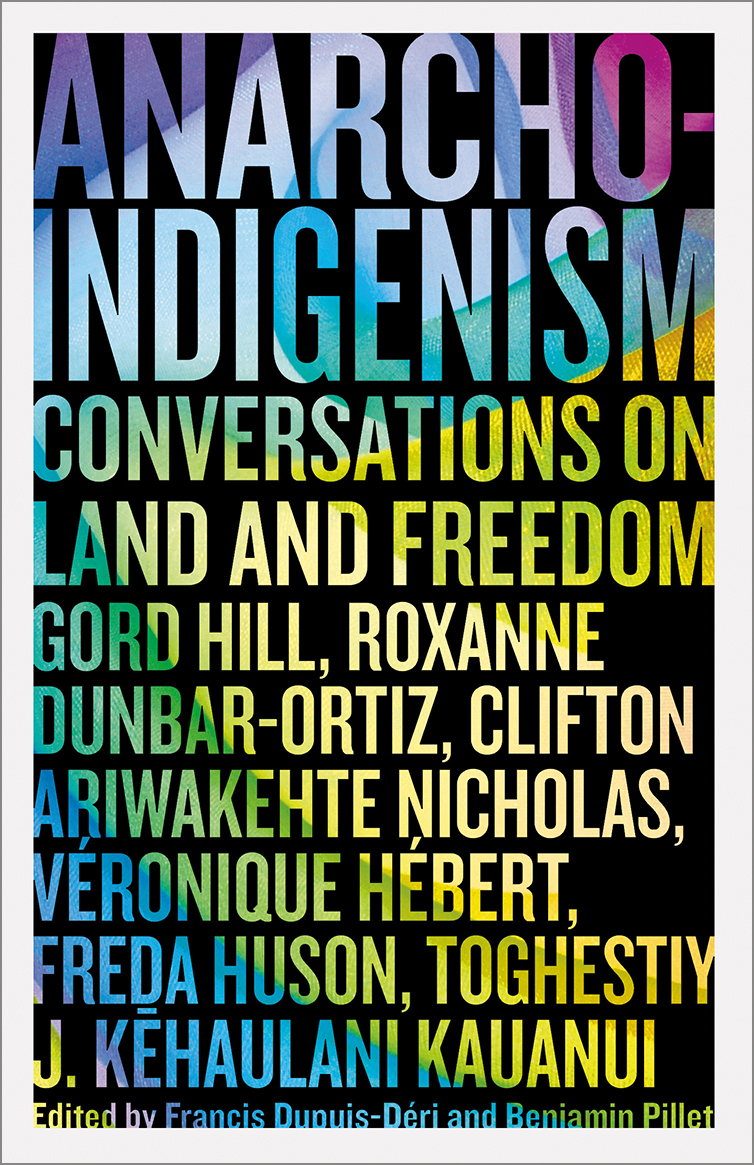

Zoyander Street reviewed Anarcho-Indigenism by Francis Dupuis-Déri
Mixed, but worth it in the end
4 stars
The meeting point of anarchism and indigenous politics is bursting with juicy contradictions and historical throughlines. The conversations in this book often challenge fundamental concepts that are often taken for granted. Is the fundamental unit of autonomy necessarily the individual, or can anarchism allow for the autonomy of a group or a people? What does it mean to "occupy" stolen land as a form of resistance? When is legal recognition a worthwhile goal, and when is it a trap?
Each of the six interviews in this book has a distinctive voice, and I think most people will be able to find at least one that resonates with them. Some chapters are conversational and meandering, while others are directed by a clear set of concerns and priorities set by the interviewee. My preference is always for the latter, but I know a lot of people who are more at home …
The meeting point of anarchism and indigenous politics is bursting with juicy contradictions and historical throughlines. The conversations in this book often challenge fundamental concepts that are often taken for granted. Is the fundamental unit of autonomy necessarily the individual, or can anarchism allow for the autonomy of a group or a people? What does it mean to "occupy" stolen land as a form of resistance? When is legal recognition a worthwhile goal, and when is it a trap?
Each of the six interviews in this book has a distinctive voice, and I think most people will be able to find at least one that resonates with them. Some chapters are conversational and meandering, while others are directed by a clear set of concerns and priorities set by the interviewee. My preference is always for the latter, but I know a lot of people who are more at home with the former. A highlight of many chapters in this book is the international solidarity work that contributors have carried out, connecting indigenous struggles on turtle island with Palestine, Aotearoa New Zealand, Greece, etc.
I left this book hungry for more, which I think is a success. I do feel a little saddened by the moments where the interviewee is having to explain the simple version of a complex problem to a non-indigenous audience; I wanted to see the version of this conversation that could have happened if the interviewer and interviewee shared an indigenous positionality, so that these explanations could be taken for granted and more complexity could be explored.