



Gersande La Flèche rated The Colorado Kid: 4 stars

The Colorado Kid by Stephen King
On an island off the coast of Maine, a man is found dead. There's no identification on the body. Only …
Why can't I read all these books!? 🍋🟩
🍵 Lots of nonfiction, literary fiction, poetry, classical literature, speculative fiction, magical realism, etc.
📖 Beaucoup de non-fiction et de fiction, de poésie, des classiques, du spéculatif, du réalisme magique, etc.
💬 they/them ; iel/lo 💌 Find me on Mastodon: silvan.cloud/@gersande
This link opens in a pop-up window
Success! Gersande La Flèche has read 12 of 12 books.

On an island off the coast of Maine, a man is found dead. There's no identification on the body. Only …
This was a really quick but fun read. I'd watched Haven (it's not ...good, do not recommend) a very long time ago and was expecting The Colorado Kid to have more of a sci-fi angle than it did, at least a more overt one, so it was cool to see what the book actually did. I liked the ending, though I understand why it's apparently pretty polarizing.
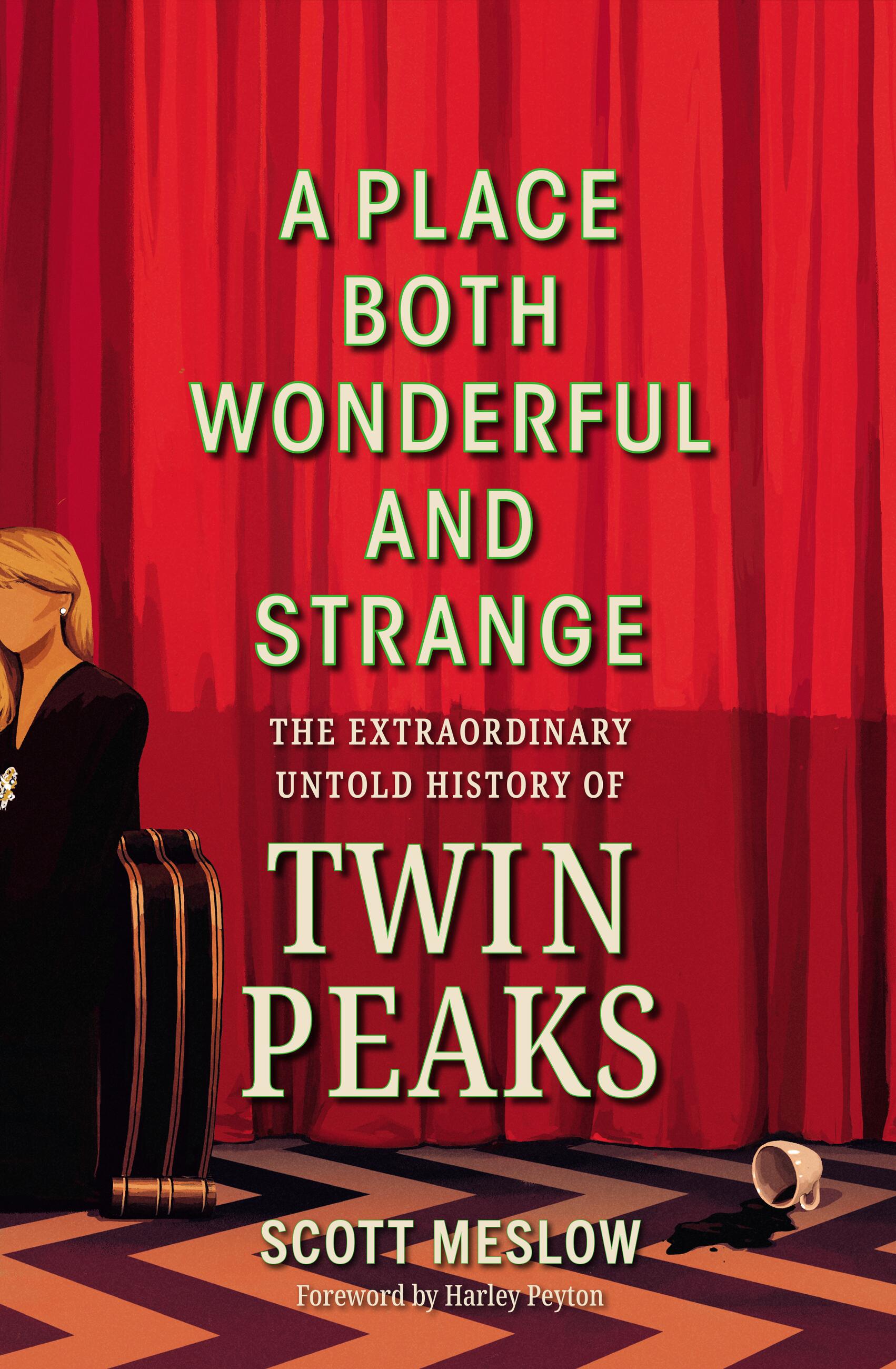
(I will say — what the fuck is up with the cover...)
This was a really quick but fun read. I'd watched Haven (it's not ...good, do not recommend) a very long time ago and was expecting The Colorado Kid to have more of a sci-fi angle than it did, at least a more overt one, so it was cool to see what the book actually did. I liked the ending, though I understand why it's apparently pretty polarizing.
(I will say — what the fuck is up with the cover...)

Gwendolyn Leick: Mesopotamia (2002, Penguin Books, Limited)
Situated in an area roughly corresponding to present-day Iraq, Mesopotamia is one of the great, ancient civilizations, though it is …

Le privilège de dénoncer cherche à savoir pourquoi les femmes et les filles noires sont largement absentes du débat public …

Popier Popol: L'étoile de mer (Paperback, Français language, Éditions grévis)
Ballottée entre un studio miteux, des relations affectives inconsistantes et un travail morne, l’héroïne, trentenaire, s’empêtre avec étonnement dans des …

Il arrive que se produisent des choses qui rassemblent l’humanité tout entière, et chacun se rappelle l’endroit où il se …

A landmark history of one hundred years of war waged against the Palestinians from the foremost US historian of the …

Since its original publication in 1955, this first nonfiction collection of essays by James Baldwin remains an American classic. His …
The position that brain and mind are separate entities was Rene Descartes’ greatest error, to borrow Antonio Damasio’s (1994) famous turn of phrase. Another of Descartes’ big errors was the idea that animals are without consciousness, without experiences, because they lack the subtle nonmaterial stuff from which the human mind is made. This notion lingers on today in the belief that animals do no think about nor even feel their emotional responses. Most who study animal brains have not yet learned how to discuss and study animal minds, especially their emotional feelings, as systematically and superbly as they study learned behaviours. Animals’ primal feelings are best studied ethologically—by monitoring their own emotional tendencies.
— Archaeology of Mind by Jaak Panksepp, Lucy Biven (Page 1)
Ethologically: the science of animal behaviour; also the study of human behaviour and social organization from a biological [Interesting] perspective
"Subtle nonmaterial stuff" really reminds me of how Philip Pullman would describe something. Lingering holdover of Christianity — Descartes was a devout Catholic, and according to Thomas d'Aquin: « l'âme des bêtes est-elle détruite avec les corps… L'âme des bêtes est produite par une énergie naturelle, mais l'âme humaine par Dieu »
Ethologically: the science of animal behaviour; also the study of human behaviour and social organization from a biological [Interesting] perspective
"Subtle nonmaterial stuff" really reminds me of how Philip Pullman would describe something. Lingering holdover of Christianity — Descartes was a devout Catholic, and according to Thomas d'Aquin: « l'âme des bêtes est-elle détruite avec les corps… L'âme des bêtes est produite par une énergie naturelle, mais l'âme humaine par Dieu »
As far as we know right now, primal emotional systems are made up of neuroanatomies and neurochemistries that are remarkably similar across all mammalian species. This suggests that these systems evolved a very long time ago and that at a basic emotional and motivational level, all mammals are more similar than they are different. Deep in the ancient affective recesses of our brains, we remain evolutionarily kin. This has long been evident in our body structures and biochemistries.
— Archaeology of Mind by Jaak Panksepp, Lucy Biven (Page 4)
Also, the mammalian brain is fundamentally a social brain, and it needs to be treated as such. (..). Thus, almost all mind-medicine interventions need to be complemented by appropriate psychosocial help, not only to trace and unravel the secondary- and tertiary-process derivatives of (perhaps lifelong) basic emotional imbalances, but also to guide, facilitate, and activate the desired primary-process affects. (..). Affective neuroscience highlights that the role of social emotions in all future therapeutic schools of thought must remain in focus in order for lasting improvements to be maximized.
— Archaeology of Mind by Jaak Panksepp, Lucy Biven (Page 1)
Affect = emotions and the neurological systems that form those emotions, basically.
(Woops put this quote with the wrong book, sorry for the double post.)
The psychoanalytic tradition was followed, during the behaviourist era, with highly focused "behaviour modification therapies," where both the cognitive and emotional issues were put aside and therapists sought to mold maladaptive behaviour patterns by adjusting reinforcement contingencies. With the cognitive revolution, the focus shifted to "cognitive behavioural therapies" (CBT) that were remarkably effective for some disorders such as specific phobias (Beck, 1976). Now, with the recognition that emotional tides lie at the core of psychiatric disorders, the winds are shifting again.
— Archaeology of Mind by Jaak Panksepp, Lucy Biven (1%)