Trying to find a better way to track books I want to read than a random spreadsheet. I had used readinglog.info which was provided by my local public library until they shut down the program. Luckily, I regularly backed it up via their CSV export. I've used Library Thing for years, but adding books for "To Read" really screwed up a lot of the other features of the website, like recommendations, etc. I really love Free Software & the Fediverse particularly. My primary social media account is on Friendica @fu@libranet.de
"Bernard Kerik was New York City's police commissioner during the 9/11 attacks, who became an …
Governor Perry has made some real positive criminal justice and penal changes in Texas—ironically enough the law and order capital of the United States. He has proven you can, one step at a time, create sentencing alternatives and close prisons. You can implement reforms, even in places you might think would be unmovable on the issue. If Texas can do this....
The second Death Star has been destroyed, the Emperor killed, and Darth Vader struck down—devastating …
Great production okay stories.
3 stars
I listened to this audio book and liked it. The Star Wars audiobooks are always amazing in terms of cinematography, or whatever the right word is for audio production. This over had lots of different story lines going on at the same time that was kind of hard to follow from the reader. Some where interesting, some where not. I liked the droid BONES who was a revamped episode one battle droid, and I was most interested in the story line where Han and Chewie got a call to go save a the wookie home works with the imperial Navy running away, but then we never got back to it.
Cloud isn’t just a place to work. It’s a place to live. And when you’re …
Not that thrilling of a thriller
2 stars
I like stories that wind up everything in a nice little package and the characters live happily ever after. That is not how The Warehouse ended, so it's hard to like it. I'm left not even sure if one character is symbolic only or still a real person truly in love.
The beginning was slow as they build the near future world where global warming has made it nearly impossible to be outside, where a mysterious black Friday massacre had led to the end of nearly all brick and motor stores and an Amazon-like megalith rules the market and MotherCloud is the new version of a company town where you live, work and play in a lifestyle that complety revolves around their monster regional warehouses that load your next order and deliver it via drone.
Hart had some inconsistencies in his world. For example we are informed that …
I like stories that wind up everything in a nice little package and the characters live happily ever after. That is not how The Warehouse ended, so it's hard to like it. I'm left not even sure if one character is symbolic only or still a real person truly in love.
The beginning was slow as they build the near future world where global warming has made it nearly impossible to be outside, where a mysterious black Friday massacre had led to the end of nearly all brick and motor stores and an Amazon-like megalith rules the market and MotherCloud is the new version of a company town where you live, work and play in a lifestyle that complety revolves around their monster regional warehouses that load your next order and deliver it via drone.
Hart had some inconsistencies in his world. For example we are informed that all of the products in the warehouse are arranged in such a way that no two similar products are anywhere near each other so no customer accidentally gets the wrong product based on a warehouse worker picking the wrong one. That actually mags a lot of sense. But later in the book our protagonist ends up being delayed by trying to find the right puzzle, or had to look the book section, contrary to how he previously told us the warehouse works.
Gibson 6 the evil CEO of Cloud. Midway of the book I'm convinced he is the devil. But at the end when he's supposed to reveal how evil he truly is, we'll maybe I've fallen for his capitalist bullshit because I honestly think he is a lot closer to the savior of the world he claims to be than the monster his author paints him as.
All in all I can't recommend, but I think others might absolutely love it.
"German baking is legendary and informs baking traditions the world over: Christmas cookies, coffee cakes, …
Apfelkuchen was not a success. It would be fascinating to know what the intended result was! But there was no picture. What I got was a thin crusty layer, some goo, and dried out apple chunks on top. I found a food blogger who made it and seemed happy with it but hers looked the same as mine (bad).
It does actually taste pretty good, but that's because sugary baked apples with lemon zest are good even when there's some goo.
Apfelkuchen was not a success. It would be fascinating to know what the intended result was! But there was no picture. What I got was a thin crusty layer, some goo, and dried out apple chunks on top. I found a food blogger who made it and seemed happy with it but hers looked the same as mine (bad).
It does actually taste pretty good, but that's because sugary baked apples with lemon zest are good even when there's some goo.
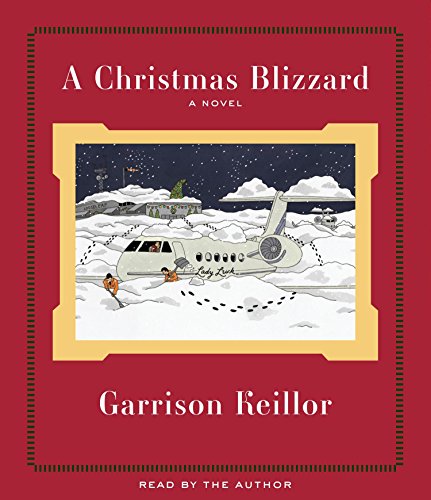
A short comic novel about a Hawaii-bound holiday traveler who ends up stranded in his …
A great ending that meandered to get there
3 stars
I liked this book it was pretty okay. The ending was really great but boy did it take time to get there. Lots of little tiny stories throughout kind of expected for Garrison Keillor but he really isn't as great at telling stories as he was in the eighties.
I finished it in just one day so that's mostly because it was an audiobook and I had a long trip that day. If this was dead tree version i'm not sure if I ever would have made it to the end.
Rich guy from the edge of the Prairie become such through no thanks to his own hard work he hates Christmas his wife loves Christmas he wants to go to Hawaii his uncle is dying he gets there things are not as he was told he has a really strange not quite sexual experience with his cousin? …
I liked this book it was pretty okay. The ending was really great but boy did it take time to get there. Lots of little tiny stories throughout kind of expected for Garrison Keillor but he really isn't as great at telling stories as he was in the eighties.
I finished it in just one day so that's mostly because it was an audiobook and I had a long trip that day. If this was dead tree version i'm not sure if I ever would have made it to the end.
Rich guy from the edge of the Prairie become such through no thanks to his own hard work he hates Christmas his wife loves Christmas he wants to go to Hawaii his uncle is dying he gets there things are not as he was told he has a really strange not quite sexual experience with his cousin? OK, I guess what happens in North Dakota stays in North Dakota.
Cloud isn’t just a place to work. It’s a place to live. And when you’re …
I'm giving my employees the tools they need to be masters of their own destiny. And that train runs two ways. A one-star employee doesn't just bring down the average, they're in a position they're not suited for. You wouldn't take a physicist and ask them to blow glass. Or a butcher and ask them to program a website. People have different skill sets and talents. Yes, Cloud is a big employer, but maybe you're not the right fit for us.
Gibson Wells is the perfect example of CEO. He not only says but honestly thinks he is helping the working class by making it harder to feed their families.