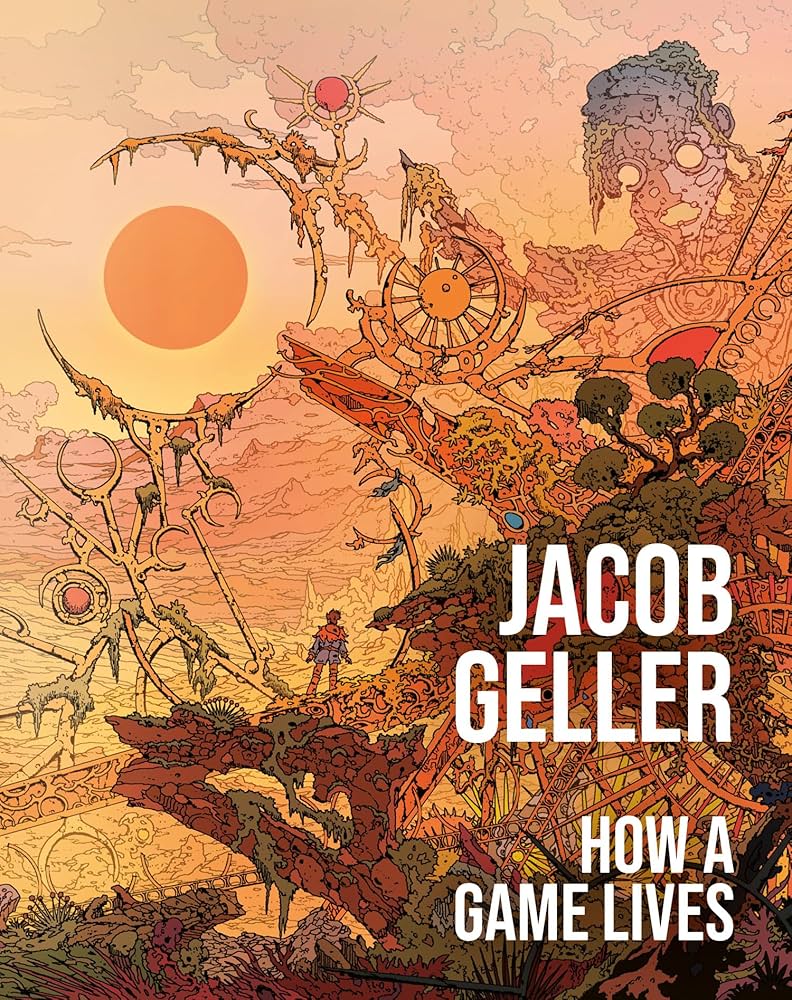

How a Game Lives
1) "It was YouTube's algorithm that catapulted me to prominence with an essay on a hidden secret in Shadow of the Colossus and that algorithm (for now) continues to favor even my most esoteric topics. Is it a deeply alienating experience to surrender success to an unknowable piece of code that understands neither quality nor morality? Yep!!!!!! But that code also helped most of you find this book, and for that, I'm appreciative."
2) "While writing this book, the entirety of Game Informer's website was unceremoniously shut down; decades of reviews, interviews, and more (like everything I wrote as an intern), flushed into the same non-existence as my original blogs. Every disappeared article, every piece of lost media, hurts our understanding of its subject. Simply playing a game (or watching a movie, or reading a poem) cannot contextualize its impact. Conversation defines a piece of art's cultural legacy. …
1) "It was YouTube's algorithm that catapulted me to prominence with an essay on a hidden secret in Shadow of the Colossus and that algorithm (for now) continues to favor even my most esoteric topics. Is it a deeply alienating experience to surrender success to an unknowable piece of code that understands neither quality nor morality? Yep!!!!!! But that code also helped most of you find this book, and for that, I'm appreciative."
2) "While writing this book, the entirety of Game Informer's website was unceremoniously shut down; decades of reviews, interviews, and more (like everything I wrote as an intern), flushed into the same non-existence as my original blogs. Every disappeared article, every piece of lost media, hurts our understanding of its subject. Simply playing a game (or watching a movie, or reading a poem) cannot contextualize its impact. Conversation defines a piece of art's cultural legacy. This is how a game dies: when all the context of its life is stripped away."
3) "This tendency for conceptual art to provoke thoughts even after the viewer rejects it is what makes it defensible as art. It is also what makes it threatening to fascists."
4) "Part of being a kid is wondering why a grown-up is crying while reading a book about a tree out loud, and a part of being an adult is being the crying reader."
5) "I will not attribute my current-day politics to Animorphs. I do not think they're the reason I don't like war. But I read these books so much as a kid. I read them far before I read about World War II, or Vietnam, or Iraq. And Applegate knew that, one day, I and all the other kids reading her books would read books, and watch movies, and consume propaganda, about war. She knew that the world we lived in wasn't frictionless, and to pretend it was would be doing us a disservice. The darkness wasn't just Animorphs' hook — it was central to the series ethos."
6) "The problem, ultimately, is what that darkness leaves you with. I could write 90% of an essay on how any of these games are the darkest in their series, but then you get to the end, and... what? 'Isn't it crazy how messed up this is?' It's an empty reading, substanceless. Ironically, it's juvenile. Being 'messed up' is not a theme. Darkness is not a narrative. Violence on its own is not mature. Every description I've given thus far is missing the crucial piece, the so what, the why should I care? [...] Every Zelda is the darkest Zelda because every Zelda is about growing up. Every Zelda is about gathering the strength and grace you need to face a world that is fundamentally harsh, alienating, and unjust."
7) "It seems like every few months, we have the same conversation about game reviews: should they factor hour count into their assessment? Is a 100-hour game inherently better for the money than a two-hour one because you get this much entertainment per dollar? I, as expected, don't like this idea. I don't judge my favorite TV shows on number of episodes, my favorite songs on their runtime. While I understand the desire to stretch one's money as far as possible, this equation just seems like another way to throw the dial all the way toward games-as-product. I have an alternative proposition, although even more impossible to implement. What is the hour count that a game lives in your memory? How often do you think of it, reference it, dream about it?"